For Indian students planning to study MBBS abroad, getting admission to a foreign medical university is only one part of the process. Students must also complete the immigration formalities required to enter and stay in the destination country for their studies.
In most cases, students begin the visa process after receiving admission or enrollment-related documentation from their university. The exact visa category, documents, fees, financial requirements, biometrics and processing procedure vary from one country to another.
How to Apply for an MBBS Student Visa Abroad
Indian students should generally follow these steps when applying for a student visa for an MBBS programme abroad.
1. Get Admission to a Foreign Medical University
The visa process generally starts after you receive an official admission or enrollment document from the university.
Depending on the destination, the university may provide an admission letter, offer letter, enrollment confirmation, invitation letter or another document required for the visa application.
Keep both physical and digital copies of all admission-related documents.
2. Check the Correct Student Visa Category
Visa terminology differs between countries. Some destinations use the term student visa, while others may use terms such as study permit, education visa or residence permit for students.
Before applying, check the latest requirements from:
- The destination country's official immigration authority
- The embassy or consulate responsible for applications from India
- The official visa application centre, where applicable
- Your university's international student or admissions office
Students should not rely on an old visa checklist because immigration requirements can change.
3. Check Your Passport
A valid passport is essential for international travel and visa applications.
Before submitting your visa application, check:
- Passport validity
- Passport number
- Name and date of birth
- Available blank pages, where applicable
- Passport photograph requirements
Your personal details should be consistent across your passport, university documents and visa application.
Indian citizens can use the official Passport Seva portal for passport-related services. The Ministry of External Affairs also advises applicants to use official passport channels and warns against fraudulent passport websites.
4. Prepare Your Academic Documents
MBBS student visa applicants may need to provide evidence of their educational background.
Depending on the destination and visa category, documents may include:
- Class 10 certificate
- Class 12 certificate
- Class 12 marksheet
- NEET-related documents, where applicable
- University admission or enrollment letter
- Academic transcripts, where requested
- Other certificates specified by the immigration authority
Some countries may require documents to be translated, notarized, legalized or apostilled. Students should check the specific rules applicable to their destination.
5. Arrange Financial Documents
Many student visa applications require applicants to demonstrate that they have sufficient financial resources to support their education and stay abroad.
Depending on the country's rules, financial evidence may include:
- Bank statements
- Fixed-deposit documents
- Education loan documents
- Scholarship documents
- Sponsor documents
- Income-related documents
- Other financial evidence specified by the immigration authority
The amount of financial evidence required differs between countries. Students should therefore use the official requirement for their specific visa category rather than relying on a general amount found online.
6. Complete the Visa Application Form
Some countries allow student visa applications to be submitted online, while others may require applicants to use an embassy, consulate or authorized visa application centre.
While completing the application:
- Enter your name exactly as shown on your passport.
- Check your passport number carefully.
- Provide the correct university details.
- Enter accurate course and travel information.
- Review the entire application before submission.
Do not provide false, misleading or inconsistent information in a visa application.
7. Pay the Visa Application Fee
Student visa applications may involve a government application fee. Depending on the destination, applicants may also have to pay separate service, biometric, medical, translation or document-processing charges.
Visa fees can change. Always verify the current fee through the official immigration authority, embassy, consulate or authorized application centre before making payment.
8. Complete Biometrics or Attend an Appointment
Some countries require student visa applicants to provide biometric information such as fingerprints and photographs.
Depending on the destination, applicants may also need to attend an appointment for document verification or a visa interview.
If an interview is required, students should understand their own application and be prepared to answer questions about:
- The university they will attend
- The MBBS course
- Course duration
- Tuition fees
- Accommodation arrangements
- Funding and sponsorship
- Their academic background
Answers should be truthful and consistent with the information submitted in the application.
9. Complete Medical or Insurance Requirements
Some destinations require international students to complete medical examinations or provide specific health documentation before a visa can be issued.
Health insurance may also be mandatory depending on the country and visa category.
Because these requirements differ significantly between countries, students should follow the instructions provided by the relevant immigration authority and university.
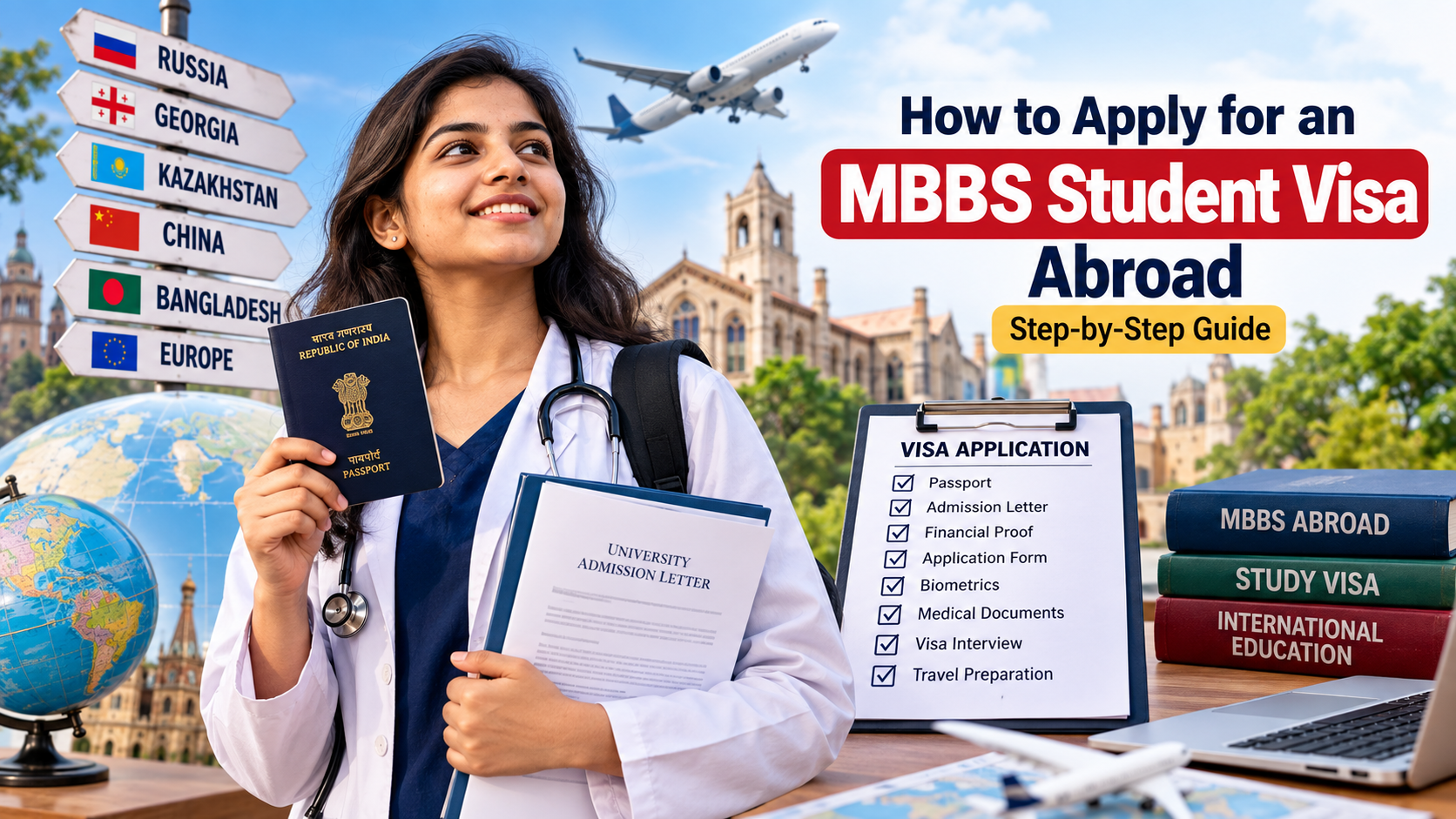
10. Submit the Required Documents
A general MBBS student visa application may require some or all of the following documents:
- Valid passport
- Passport photographs, where required
- University admission or enrollment document
- Academic certificates and marksheets
- Financial documents
- Completed visa application form
- Visa fee payment receipt
- Accommodation information, where required
- Medical documents, where required
- Insurance documents, where required
- Sponsorship documents, where applicable
- Additional immigration documents specified by the destination country
This is a general checklist. The actual documents required should always be confirmed using the official visa checklist for the destination country.
11. Attend the Visa Interview, If Required
Not every student visa requires an interview.
If an interview is part of the process, applicants should be familiar with their university, course, tuition fees, accommodation, funding arrangements and academic background.
Students should answer questions honestly rather than relying on memorized responses.
12. Track the Visa Application
After submission, applicants may receive an application or tracking reference. This can usually be used to check the status through the relevant official portal or authorized visa application centre.
Processing times vary according to the country, visa category, application volume, season and individual circumstances.
Students should plan their travel around the official visa process and carefully consider the risks of purchasing non-refundable tickets before receiving the required travel authorization.
What Should Students Do After the Visa Is Approved?
After receiving the visa or other required immigration authorization, carefully check the details.
- Name
- Passport number
- Visa category
- Validity dates
- Entry conditions
- Number of permitted entries, where applicable
Students should keep their passport, visa, admission documents and other important records safely accessible while travelling.
What If an MBBS Student Visa Is Rejected?
If a student visa application is refused, the applicant should first read the official refusal or decision notice carefully.
The next step depends on the reason for refusal and the immigration rules of the destination country. Where an appeal, reconsideration or fresh application is permitted, students should follow the official procedure.
Submitting another application without understanding the reason for the original refusal may not address the underlying issue.
Common Mistakes to Avoid
Using outdated visa information
Immigration requirements can change. Always check the latest official information before applying.
Providing inconsistent information
Information in your passport, university documents, financial records and visa application should be accurate and consistent.
Ignoring financial requirements
Understand the financial evidence requirements for your specific destination before submitting the application.
Submitting incomplete documents
Use the official checklist and review every requirement before submitting the application.
Providing false information
False or misleading information can create serious immigration problems and may affect the application.
Depending only on unofficial sources
Online forums, social media and third-party websites can contain useful experiences, but official government immigration sources and the university should be treated as the primary references for current visa requirements.
How Early Should You Apply for an MBBS Student Visa?
Students should begin preparing their visa documents as soon as they receive the necessary admission-related documents and understand the destination country's application timeline.
Additional time may be necessary if the process involves document legalization, medical examinations, translations, biometrics or interviews.
A practical sequence is:
Admission → Check visa requirements → Prepare documents → Submit application → Biometrics/interview if required → Track application → Receive decision → Prepare for travel
MBBS Student Visa Checklist Before Travelling
- Valid passport
- Approved student visa or required immigration document
- University admission documents
- Tuition-fee payment records
- Accommodation information
- Academic certificates
- Financial documents
- Medical documents, if required
- Insurance documents, if required
- Flight details
- Emergency contact information
- University contact information
- Secure digital backups of important documents
Frequently Asked Questions
Can I apply for a student visa before getting MBBS admission?
In most cases, students need admission or enrollment-related documentation from the foreign institution before applying for the relevant student visa. The exact requirement depends on the destination country.
Is an MBBS student visa the same in every country?
No. Countries have different visa categories, eligibility rules, documentation requirements, fees and immigration conditions for international students.
Do MBBS students need financial proof for a student visa?
Many countries require evidence that students can meet their education and living expenses, but the required amount and acceptable documents vary by country.
Is a visa interview compulsory for MBBS students?
Not necessarily. Whether an interview is required depends on the destination country, visa category and individual application.
Can students work while studying MBBS abroad?
Whether an international student can work depends on the immigration rules and conditions attached to the student's visa. Students should check the official rules before taking employment.
Where should Indian students check the latest visa requirements?
Students should check the official immigration authority of the destination country, the relevant embassy or consulate, the authorized visa application centre where applicable, and their university's international student office.
Final Word from PulseNex Editorial
Applying for an MBBS student visa is an important step after receiving admission to a foreign medical university. The process can involve passport checks, academic documents, financial evidence, application forms, biometrics, medical requirements and other country-specific procedures.
The safest approach is to start early, keep documents consistent and verify the latest requirements directly with the relevant immigration authority, embassy or consulate and university.
Disclaimer: This article is for general educational and informational purposes. Visa requirements, fees, processing procedures and immigration rules may change. Students should verify the latest requirements with the relevant government immigration authority, embassy or consulate and university before submitting a visa application.