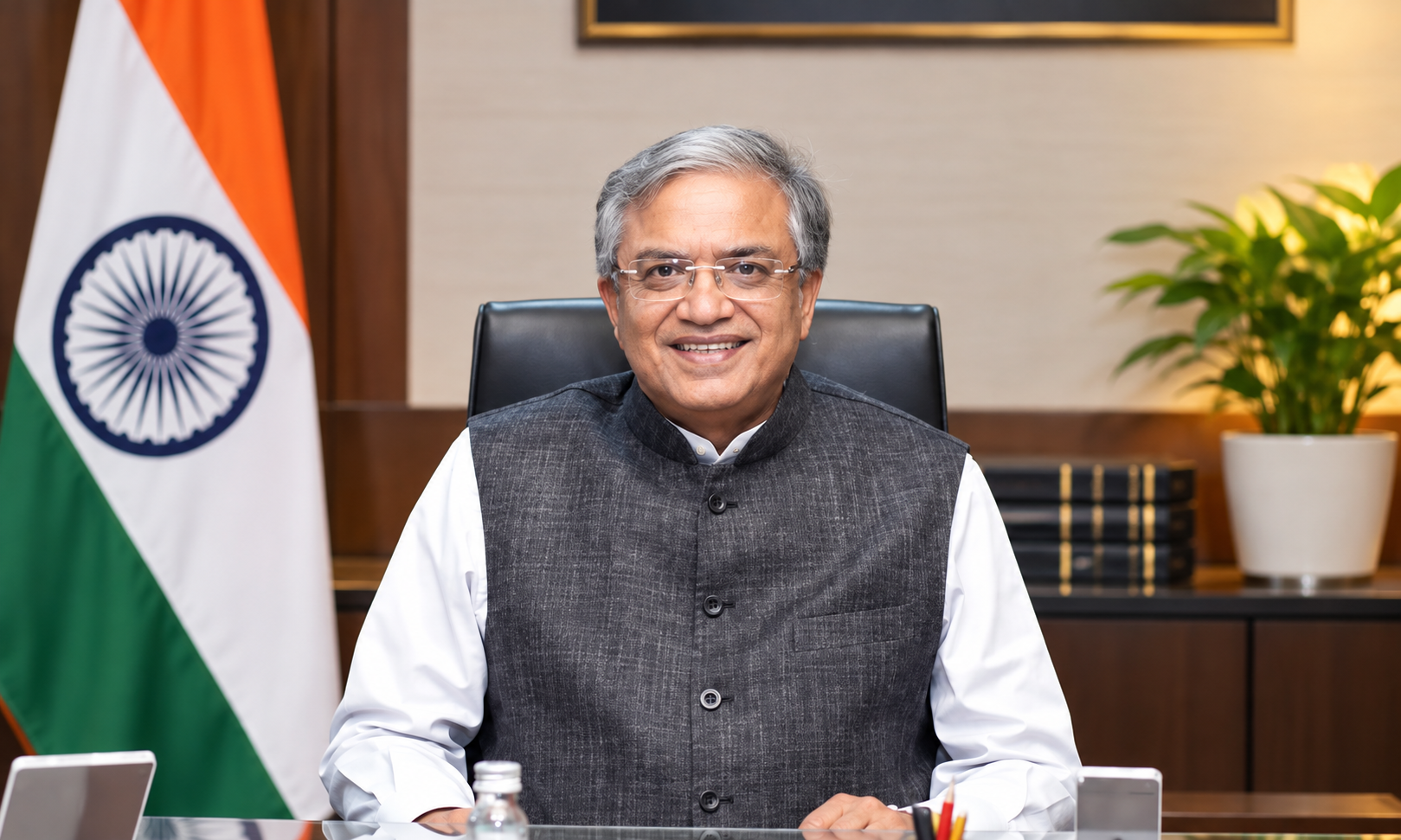
Chief Election Commissioner Gyanesh Kumar is facing renewed scrutiny after a report by The Indian Express detailed a series of internal objections allegedly raised by the other two members of the Election Commission of India (ECI), Sukhbir Singh Sandhu and Vivek Joshi.
The reported disagreements concern some of the most sensitive functions of the election machinery, including the registration of new voters, deletion and restoration of names from electoral rolls, access to voter databases and the administration of the ongoing Special Intensive Revision (SIR).
The developments have triggered a fresh political debate over the functioning and credibility of the Election Commission. However, the allegations and political interpretations remain contested, while the ECI has said that differences of view are a normal part of institutional decision-making.
Who is Gyanesh Kumar?
Gyanesh Kumar is the 26th Chief Election Commissioner of India. According to the Election Commission's official profile, he took charge as CEC on 19 February 2025 after serving as an Election Commissioner from March 2024.
A 1988-batch Kerala-cadre IAS officer, Kumar previously held senior positions in both the Kerala government and the Union government, including roles in the Ministries of Defence, Home Affairs, Parliamentary Affairs and Cooperation.
The Election Commission currently consists of Gyanesh Kumar as Chief Election Commissioner and Sukhbir Singh Sandhu and Vivek Joshi as Election Commissioners.
Why is Gyanesh Kumar facing fresh scrutiny?
The latest controversy follows an investigation by The Indian Express published on 23 September 2026. The report said Sandhu and Joshi had formally objected on at least 14 occasions during the previous 10 months to decisions and processes that they said were undertaken without their knowledge or approval.
According to the report, the objections covered several areas directly connected to electoral-roll management. These included changes to the process for registering new voters, deletion and restoration of voter names, appeals relating to electoral-roll decisions and access to the digital systems used to maintain voter information.
The report also said the two Commissioners raised concerns about the possibility of greater centralisation of electoral-roll database access and separately approached the Cabinet Secretary over aspects of the election technology system.
What is the Special Intensive Revision of electoral rolls?
The Special Intensive Revision, commonly known as SIR, is an exercise aimed at reviewing and updating electoral rolls.
The Election Commission says its objective is to ensure that eligible citizens are included while ineligible entries are removed. The ECI has invoked Article 324 of the Constitution and relevant provisions of the Representation of the People Act, 1950 while conducting SIR.
The Commission's voter-service portal currently provides dedicated facilities for SIR-related processes, including searching names in previous rolls, submitting documents and completing voter-registration forms.
The exercise has nevertheless become politically contentious, particularly because changes to electoral rolls can affect whether individual citizens are able to vote in an election.
What are the objections concerning Form 6?
One of the reported disputes concerns Form 6, the statutory application used by eligible citizens to register as new voters.
The Indian Express reported that a new declaration connected to the SIR process was added to the online voter-registration procedure. The declaration asked applicants about the presence of their own, their parents' or their grandparents' names in an earlier electoral roll.
The report said Vivek Joshi had earlier recorded that statutory Form 6 could not be altered without changes to the applicable electoral rules, while Sukhbir Singh Sandhu subsequently described the change as unauthorised and called for its removal.
The dispute is significant because Form 6 is used by people seeking to register as voters for the first time. The issue therefore goes beyond an administrative disagreement and concerns the procedure through which citizens enter the electoral roll.
Questions over access to the voter database
Another reported area of disagreement involves access to the digital systems used to maintain electoral rolls.
According to The Indian Express, Election Commissioner Vivek Joshi raised concerns about what he described as the gradual centralisation of electoral-roll database access. Sukhbir Singh Sandhu reportedly raised similar concerns and questioned whether state-level officials continued to have the access required for their statutory responsibilities.
The issue matters because electoral-roll preparation traditionally involves officials operating at constituency and state levels. Questions about who can access, modify or supervise electoral databases therefore have direct implications for the administration of voter lists.
What happened in West Bengal?
West Bengal has been one of the most closely watched states in the SIR debate.
The Election Commission told the Supreme Court that 27.16 lakh voters were removed from the West Bengal electoral rolls during the SIR process. More than 22 lakh of those voters subsequently filed appeals seeking restoration, according to reporting on the Commission's submissions to the court.
The Commission said a total of 38.31 lakh appeals had been filed, including appeals seeking inclusion and appeals seeking deletion of names.
The West Bengal process has also involved judicial oversight. The Supreme Court had directed that tribunals involving retired High Court judges hear appeals relating to the disputed electoral-roll decisions.
These developments have made West Bengal an important part of the wider debate surrounding SIR, voter deletions and the safeguards available to citizens whose names are removed from electoral rolls.
What has the Election Commission said?
The Election Commission has rejected the suggestion that the reported internal differences demonstrate a breakdown in its functioning.
In a statement following the Indian Express report, the Commission said that differing views and observations are a normal part of deliberations within an institution. It also said that officers and Commissioners are authorised to offer suggestions aimed at improving the electoral system.
The ECI further said that focusing on selected internal notes over a 10-month period without considering the wider body of decisions and initiatives presented only part of the picture. According to the Commission, around 40 initiatives and electoral reforms had been introduced in recent months and the decisions taken by the full Commission during the previous year were unanimous.
What does the law say about the Election Commission's decision-making?
The Election Commission is a constitutional authority established under Article 324 of the Constitution.
The legal framework governing the three-member Commission provides for collective decision-making. The 2023 law governing the appointment, conditions of service and term of office of the Chief Election Commissioner and other Election Commissioners states that the Commission's business should, as far as possible, be transacted unanimously. Where members differ, the law provides for the matter to be decided according to the majority view.
The recent dispute therefore raises an important institutional question: how disagreements between members of a constitutional commission should be documented, resolved and communicated while maintaining public confidence in the electoral process.
Why the controversy matters
The Election Commission plays a central role in India's electoral system. Its responsibilities include administering elections and supervising the preparation and revision of electoral rolls.
Because voter lists determine who is formally registered to vote, changes to those lists can have significant consequences for individual citizens.
The current controversy involves two separate issues that should be distinguished.
- Administrative disagreement: The reported objections by two Election Commissioners concern how particular decisions and systems were handled.
- Political allegations: Opposition parties have made broader allegations about the impact of electoral-roll revisions. Those allegations are disputed by the Election Commission and the BJP.
The existence of internal objections does not by itself establish that elections were manipulated or that voters were deliberately excluded. Those are separate factual and legal questions that require evidence and, where applicable, judicial or institutional determination.
What happens next?
The immediate focus is likely to remain on the implementation of SIR, the handling of appeals against electoral-roll decisions and the functioning of the ECI's digital systems.
The controversy may also generate further scrutiny of how decisions are recorded within the Commission and how disagreements between Election Commissioners are resolved.
For voters, the practical issue remains straightforward: citizens should check whether their names appear on the electoral roll and use the prescribed procedures if they believe their information is missing or incorrect. The ECI's voter-service portal provides facilities for checking electoral-roll information and accessing voter-registration services.
Editorial NoteThis article distinguishes documented developments from allegations and political claims. Claims concerning electoral manipulation, voter exclusion or institutional misconduct should not be treated as established facts unless supported by appropriate evidence or findings by competent authorities.