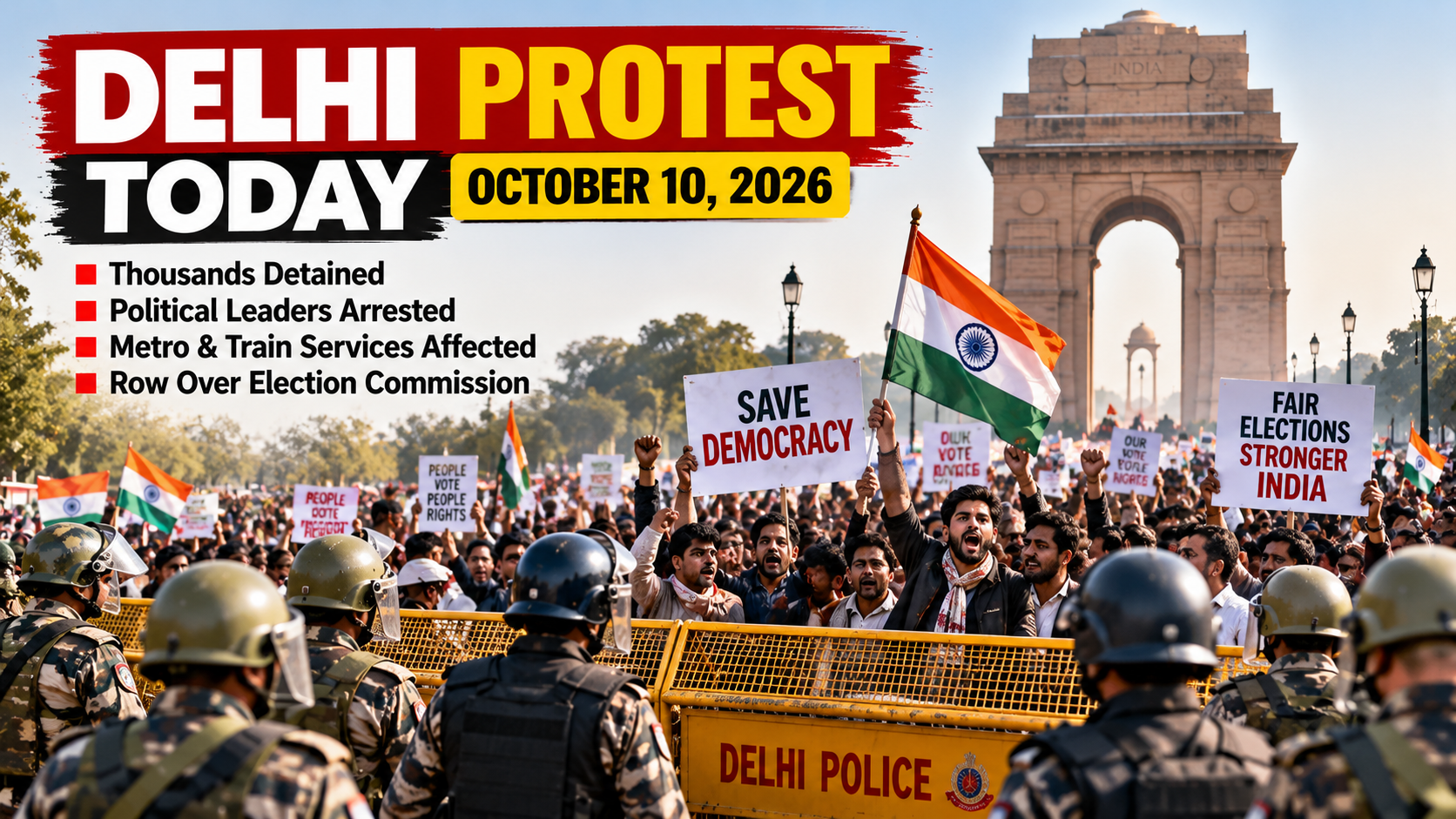
New Delhi, October 10, 2026: Delhi witnessed a major security operation on Saturday as police detained protesters, activists and political leaders during a planned demonstration over electoral-roll revisions and demands for the resignation of Chief Election Commissioner Gyanesh Kumar.
The protest was associated with the Cockroach Janta Party (CJP) and other groups opposing the Special Intensive Revision (SIR) of electoral rolls. Police denied permission for the planned demonstration, citing public-order and security concerns. Organisers and opposition figures criticised the restrictions and questioned the handling of peaceful political mobilisation.
Reporting by The Indian Express said approximately 2,000 people had been detained across Delhi by 2:49 PM IST. The number was a newsroom-reported count at that time, not a final official total. Security arrangements, transport restrictions and the status of detained individuals may have changed as the day progressed.
Why Were Protests Planned in Delhi?
The demonstrations centred on the Special Intensive Revision of electoral rolls, a process intended to review voter lists. Protest organisers and participating opposition groups raised concerns about the revisions and called for accountability from Chief Election Commissioner Gyanesh Kumar.
The demand for the Chief Election Commissioner’s resignation was a central focus of the planned mobilisation at Jantar Mantar. The dispute reflects wider political disagreement over how electoral rolls should be reviewed, how changes should be communicated and how concerns about voter inclusion should be addressed.
Claims about the scale, fairness or political impact of the revision should be evaluated against official Election Commission information, relevant court proceedings and independently verified evidence. Allegations made by political parties or protest organisers should not automatically be treated as established findings.
Delhi Police Denied Permission for the Demonstration
According to reporting by The Indian Express, Delhi Police did not grant permission for the planned CJP demonstration. Police cited the protest call’s lack of permission and public-order concerns. Earlier reporting also said police raised issues related to the timing of the application and conditions imposed during a previous demonstration.
The police position and the protesters’ criticism are distinct parts of the story. The authorities said restrictions were necessary to manage security and maintain order, while organisers and opposition figures argued that the measures prevented people from assembling and expressing political views.
Delhi Police published a press-release entry titled “Rationale for Restrictions Imposed in New Delhi” on its official press-release page. Readers should consult that statement and any subsequent official notices for the authorities’ detailed explanation.
Political Leaders and Activists Were Detained
The Indian Express reported that CJP founder Abhijeet Dipke and other movement leaders were detained after arriving in Delhi. The report also described detentions involving opposition politicians, activists and public figures at different locations.
According to the same report, the CJP condemned the detention of its leaders and said the protest would continue. Police, meanwhile, maintained that the planned demonstration had not been permitted.
Detention should not be described as a conviction or proof of criminal wrongdoing. The legal status and circumstances of each person’s detention may differ, and individual cases should be reported only when reliable information is available.
How Many People Were Detained?
The Indian Express reported that about 2,000 people had been detained across Delhi by approximately 2:49 PM IST on October 10. Other live reports published during the day cited different figures as the operation continued.
Because detention counts changed during the day and reports were updated at different times, readers should treat each figure as a time-specific estimate unless confirmed by a later official statement. This report does not present a single final number for all detentions.
Metro Services, Trains and Traffic Were Affected
Security measures also disrupted movement through parts of the capital. The Indian Express reported restrictions on entry and exit at about 45 Metro stations and more than 250 train cancellations until 2 PM. These figures describe the reported situation at that time and should not be interpreted as a complete account of every later service change.
Traffic restrictions and barricades were reported in central Delhi. Travellers heading to railway stations, workplaces or major public areas were advised by news reports to check updated service information before travelling.
For current Metro operations, train services and road diversions, passengers should consult the relevant transport operator, railway notices and official traffic advisories. A station or route restriction reported earlier in the day may subsequently be changed.
What Did Opposition Parties and the BJP Say?
Opposition leaders criticised the detentions and security restrictions, arguing that the measures curtailed democratic rights and prevented the planned protest from taking place as intended. Some leaders compared the scale of the restrictions with past periods of emergency rule.
BJP leaders, according to The Indian Express, defended the restrictions on public-safety grounds and criticised the protest movement. The competing statements reflect the political dispute surrounding both the electoral-roll revision and the authorities’ response to the planned demonstration.
These are political positions, not independent findings about the legality of every detention or the accuracy of allegations concerning the voter lists. Any legal assessment should rely on court orders, applicable law and verified records.
What Is Known About the Official Position?
Delhi Police’s published press-release list included an entry titled “Rationale for Restrictions Imposed in New Delhi” dated October 10, 2026. News reports also stated that police had denied permission for the planned demonstration and cited law-and-order concerns.
This article does not claim to reproduce the complete contents of the official statement. Readers should consult the original release and any later police or government updates to establish the precise legal grounds, geographical scope and duration of the restrictions.
What Happens Next?
The key developments to watch are whether further official statements are issued, whether detained individuals are released or face formal legal proceedings, whether transport services return to normal and whether the organisers announce further demonstrations.
Any claims about additional arrests, injuries, charges, court proceedings or changes in restrictions should be added only after verification from official records or credible independent reporting.
Conclusion
The Delhi protests of October 10, 2026, brought electoral-roll revisions, the role of the Election Commission and the limits of public demonstrations into sharp political focus. Police imposed extensive security measures and detained protesters, while organisers and opposition figures criticised the restrictions.
The situation should be understood through clearly attributed reporting, official documents and verified updates. Detention counts and transport restrictions are time-sensitive, and allegations made by any side should not be presented as established facts without supporting evidence.
Update note: This report reflects information published on October 10, 2026. Check official notices and current transport advisories before relying on operational details.
Editorial disclaimer: This is a news report based on the sources listed below. Statements attributed to police, political parties or protest organisers reflect their reported positions and are not independent findings unless specifically stated.