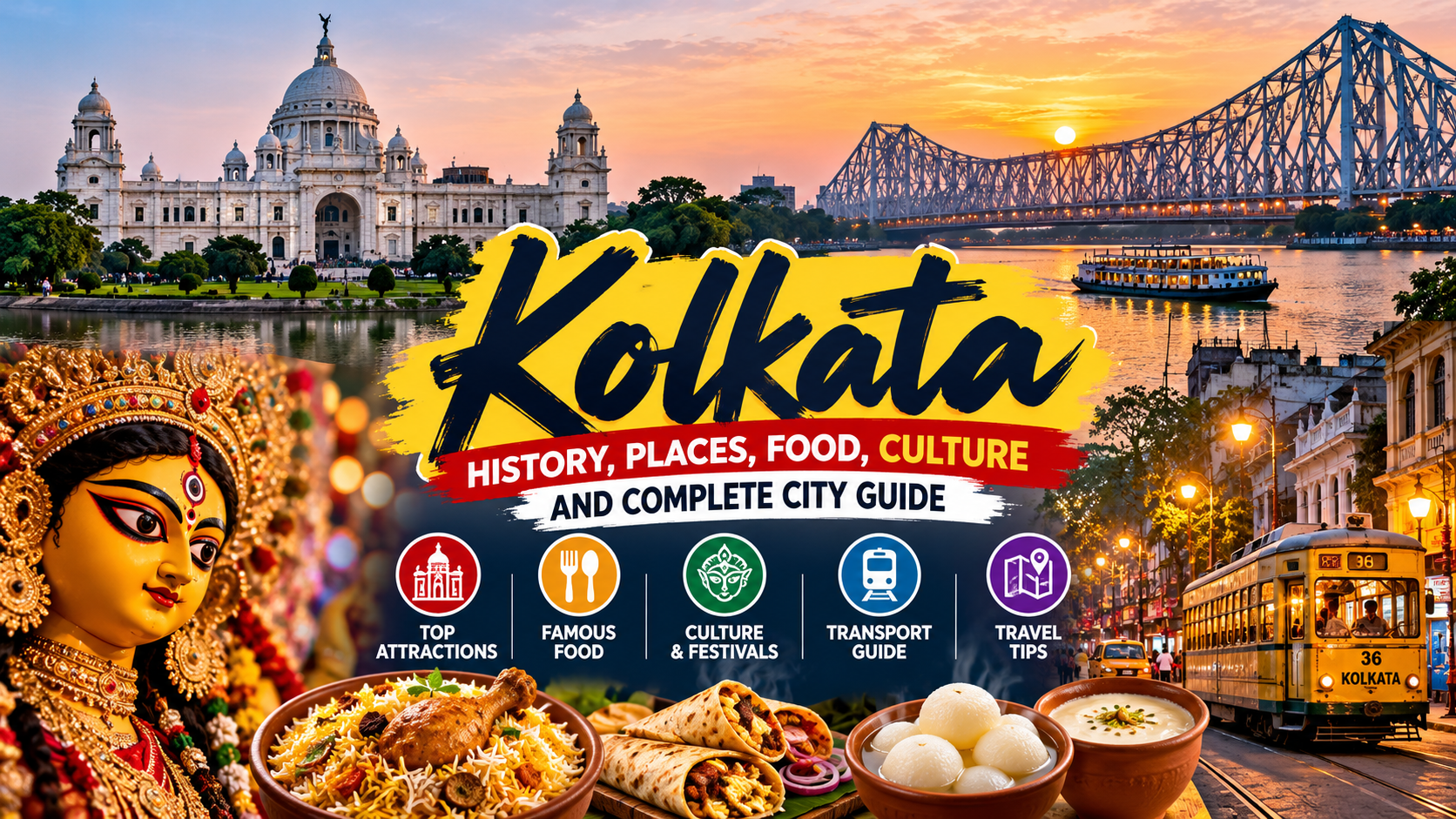
Kolkata, the capital of West Bengal, is one of India's most distinctive cities. Often called the City of Joy, it is known for its historic architecture, Bengali literature, art, cinema, festivals, street food and lively neighbourhoods. Located beside the Hooghly River, Kolkata brings together colonial-era landmarks, traditional markets, religious sites, educational institutions and modern commercial districts.
Whether you are planning your first visit, researching the city's history, exploring famous places or learning about Bengali culture, this Kolkata city guide covers its major attractions, food, festivals, transport and practical travel considerations.
Where Is Kolkata Located?
Kolkata is located in eastern India and serves as the capital of West Bengal. The city stands on the eastern bank of the Hooghly River, a distributary of the Ganges river system. Its location has played an important role in its development as a historic port, trading centre and gateway connecting eastern India with other regions.
Kolkata is connected to the rest of India through railways, road networks and Netaji Subhas Chandra Bose International Airport. Howrah and Sealdah are among the city's most important railway hubs, while the metro, buses, suburban trains, taxis and ferries help people move around the wider urban area.
Why Is Kolkata Called the City of Joy?
Kolkata is widely known by the nickname City of Joy. The expression is associated with the city's cultural energy, neighbourhood life, literary traditions, festivals, food and social character.
The city is particularly known for its strong relationship with literature, music, theatre, visual arts and cinema. Its streets and neighbourhoods reflect a mixture of historic buildings, busy markets, traditional sweet shops, tea stalls, educational institutions and contemporary businesses.
Rather than being defined by a single attraction, Kolkata's identity comes from the combination of its cultural heritage and everyday life. A walk through an old North Kolkata neighbourhood, a visit to a museum or an evening near the river can reveal very different aspects of the city.
A Brief History of Kolkata
Kolkata developed from historic settlements along the Hooghly River, including Sutanuti, Govindapur and Kalikata. The East India Company's presence and the growth of British colonial administration helped transform the area into a major commercial and political centre.
Fort William, trading establishments and expanding transport links contributed to the city's growth. Kolkata became the capital of British India in the late eighteenth century and remained the imperial capital until the capital was transferred to Delhi in 1911.
The city also became a major centre of intellectual and social change. The Bengal Renaissance brought developments in literature, education, science, journalism, art and reform movements. Figures associated with this broad period include Raja Ram Mohan Roy, Ishwar Chandra Vidyasagar, Rabindranath Tagore and other influential thinkers and cultural figures.
Kolkata played an important role in India's freedom movement and experienced major political, economic and social changes during the twentieth century. After independence and Partition, migration, industrial change and urban expansion shaped the city's development.
Today, Kolkata combines its historic identity with education, trade, healthcare, public services, information technology, creative industries and a large metropolitan economy. The Kolkata Municipal Corporation's history section provides further information about the city's historical development.
Top Places to Visit in Kolkata
Kolkata offers attractions for visitors interested in history, architecture, religion, art, science, food and local neighbourhoods. Opening hours, admission fees and access conditions can change, so check official information before visiting.
1. Victoria Memorial
Victoria Memorial is one of Kolkata's best-known landmarks. Built in memory of Queen Victoria, the white-marble monument combines European architectural influences with a museum collection covering art and history. Its galleries, gardens and prominent position near the Maidan make it an important stop for first-time visitors.
Visitors interested in colonial history, paintings, historic documents and architecture can spend time exploring the building and its surroundings. Check the official museum website for current opening hours, ticket information and gallery access.
2. Howrah Bridge
Howrah Bridge, also known as Rabindra Setu, is an iconic steel bridge connecting Kolkata and Howrah across the Hooghly River. It is closely associated with the movement of commuters, pedestrians and vehicles between the two cities.
The bridge is especially recognisable in photographs of Kolkata and offers a striking view of the riverfront. Visitors should use designated pedestrian areas and follow traffic and safety rules rather than stopping in active traffic lanes for photographs.
3. Indian Museum
The Indian Museum is one of India's major museums and an important destination for people interested in history, archaeology, art and natural history. Its collections cover a wide range of subjects and include historical objects, sculptures, fossils and other exhibits.
Allow enough time to explore the galleries that interest you. Check current museum timings and ticket information before planning a visit.
4. Dakshineswar Kali Temple
Dakshineswar Kali Temple is a prominent Hindu temple complex on the eastern bank of the Hooghly River. Dedicated to Goddess Kali, it is associated with the spiritual history of nineteenth-century Bengal and the life of Sri Ramakrishna.
The temple attracts devotees and visitors interested in religious heritage. Visitors should respect temple customs, dress appropriately and follow instructions about photography, footwear and access.
5. Kalighat Kali Temple
Kalighat Kali Temple is one of Kolkata's best-known religious destinations. The temple is associated with the worship of Goddess Kali and attracts pilgrims throughout the year, particularly during important religious occasions.
The surrounding streets are busy and contain shops selling flowers, offerings and religious items. Visiting outside peak periods may make the surrounding area easier to navigate, although crowd levels can vary.
6. Kumartuli
Kumartuli, in North Kolkata, is famous for its community of artisans who create clay idols for religious festivals, especially Durga Puja. The neighbourhood provides a close look at a traditional craft that remains important to the city's cultural identity.
Before Durga Puja, the workshops become especially active as artisans prepare idols for pandals across Kolkata and beyond. Visitors should be respectful in working spaces and ask permission before photographing artists or unfinished idols.
7. Prinsep Ghat
Prinsep Ghat is a popular riverfront destination known for its historic memorial, views of the Hooghly and nearby Vidyasagar Setu. The riverside setting makes it a common place for walks, photography and spending time outdoors.
Evening visits can offer attractive river views, but visitors should follow local safety instructions and avoid restricted areas near the water.
8. Jorasanko Thakur Bari
Jorasanko Thakur Bari is the ancestral home of the Tagore family and is closely associated with Rabindranath Tagore. The historic house and its museum provide insight into the family's role in Bengali literature, music, art and cultural reform.
It is a valuable destination for readers, students and visitors interested in the Bengal Renaissance and the development of modern Bengali culture.
9. Science City
Science City is a major science-learning attraction in Kolkata, with exhibits and experiences designed to make scientific concepts accessible to visitors. It is particularly suitable for families, school groups and students looking for an educational outing.
Check the current programme, ticket prices and opening schedule before travelling.
10. Park Street
Park Street is one of Kolkata's best-known areas for restaurants, cafés, bakeries and nightlife. It has a long association with the city's dining and entertainment scene and attracts people looking for both traditional and contemporary food experiences.
The area is especially busy during festive periods and the Christmas season. Visitors should check individual venue hours and plan transport in advance during peak times.
Famous Food in Kolkata
Food is a major part of Kolkata's identity. The city's culinary culture brings together Bengali home-style cooking, traditional sweets, street food, Mughlai-influenced dishes and long-established restaurants.
Kolkata Biryani
Kolkata biryani is known for its aromatic rice, carefully balanced spices and the characteristic use of potato in many local preparations. Recipes vary between establishments, and diners may find versions with chicken, mutton or other ingredients.
Kathi Rolls
Kathi rolls are a popular Kolkata street-food choice. A filling such as egg, chicken or paneer is wrapped in a paratha or similar flatbread, often with onion, sauces and seasoning. They are convenient for a quick meal while exploring the city.
Roshogolla
Roshogolla is a well-known Bengali sweet made from chhena and cooked in sugar syrup. It is closely associated with the wider sweet-making traditions of Bengal and is enjoyed at celebrations and family gatherings.
Mishti Doi
Mishti doi is sweetened, fermented yoghurt that is traditionally served chilled. Its creamy texture and caramel-like sweetness make it a popular dessert and a familiar part of Bengali festive meals.
Phuchka
Phuchka is Kolkata's much-loved version of the filled, crisp street snack known by different names across India. It is commonly served with a spicy, tangy water and a filling based on potato or other local ingredients.
Telebhaja and Bengali Snacks
Telebhaja refers to fried snacks enjoyed with tea, particularly during rainy weather or as an evening treat. Local shops also sell singara, chop and other savoury items that are part of everyday Bengali food culture.
When trying street food, choose vendors with good food-handling practices, freshly prepared items and clean serving areas. People with food allergies or dietary restrictions should ask about ingredients before ordering.
Culture, Literature and Festivals in Kolkata
Durga Puja
Durga Puja is one of Kolkata's most important cultural and religious festivals. During the celebration, communities create elaborate pandals and artistic installations, while artisans, organisers and local businesses prepare for large public gatherings.
The festival combines religious observance, sculpture, visual design, music, community participation and food. Visitors should plan transport carefully, expect crowded areas and follow local safety and crowd-management instructions.
Rabindranath Tagore and Bengali Literature
Kolkata has a deep connection with Bengali literature and intellectual life. Rabindranath Tagore's work in poetry, songs, fiction and essays remains influential in Bengal and beyond. Libraries, museums, cultural institutions and educational centres continue to support literary and artistic traditions.
Cinema, Theatre and Music
The city has a long association with Indian cinema, independent filmmaking, theatre, classical music and contemporary performance. Cultural venues and film institutions help preserve this heritage while providing space for new work.
Visitors interested in performances should check current schedules rather than assuming that a venue will host a particular show on a given date.
Transport in Kolkata
Kolkata has a diverse transport network that includes the metro railway, suburban trains, buses, taxis, app-based cabs and ferries. The most convenient option depends on the starting point, destination, time of day and current service conditions.
Kolkata Metro
The metro is useful for travelling between several major residential, commercial and transport areas. Routes and service arrangements have expanded over time, so visitors should consult official Kolkata Metro information for current lines, operating hours, fares and interchange details.
Local Trains and Railway Stations
Howrah and Sealdah are major railway hubs serving long-distance and suburban passengers. Kolkata also has other rail connections. Travellers should confirm their departure station and allow time for city traffic and station entry procedures.
Buses, Taxis and App-Based Cabs
Buses and taxis provide access to areas that may not be convenient by metro. App-based cabs can be useful when carrying luggage or travelling late, subject to availability and local traffic. Check the fare estimate and pickup point before beginning a journey.
Ferries Across the Hooghly
Ferry services connect selected riverfront points and can provide an alternative to road travel between parts of Kolkata and Howrah. Routes, frequency and service conditions can vary, so verify current schedules before depending on a ferry for a time-sensitive journey.
Best Time to Visit Kolkata
Many visitors prefer the cooler months, particularly from roughly October to February, for sightseeing and walking around the city. Durga Puja, usually held in the autumn according to the Hindu calendar, is a major attraction for people interested in festivals and public art, although accommodation and transport can be busier during this period.
Summer can be hot and humid, while the monsoon brings rainfall that may affect outdoor plans and road travel. Conditions vary from year to year, so check the weather forecast before visiting and carry appropriate clothing and rain protection when needed.
How Many Days Are Enough to Explore Kolkata?
A two-day visit can cover several major landmarks and food areas, while three or four days allow more time for museums, temples, historic neighbourhoods and cultural experiences. The ideal length of a visit depends on personal interests, travel pace and whether nearby destinations are included.
Suggested Two-Day Kolkata Itinerary
Day 1: Begin with Victoria Memorial and nearby historic landmarks, then visit the Indian Museum if time and opening hours permit. Spend the evening exploring Park Street or another restaurant area.
Day 2: Explore Howrah Bridge and the riverfront, then visit Kumartuli or Jorasanko Thakur Bari. If religious sites are a priority, consider Dakshineswar Kali Temple or Kalighat Kali Temple, checking travel time and temple schedules in advance.
This is a flexible outline rather than a fixed timetable. Check opening hours, transit conditions and the distance between destinations before finalising your route.
Practical Tips for Visitors to Kolkata
- Check attraction opening hours and ticket rules on official websites before travelling.
- Carry drinking water and dress for the weather, especially during hot and humid periods.
- Allow extra travel time during festivals, rush hours and heavy rainfall.
- Use designated pedestrian areas and follow safety instructions near bridges and riverfronts.
- Respect customs at temples and other religious places.
- Ask permission before photographing artisans, worshippers or people in private spaces.
- Confirm the correct railway station, terminal and pickup point before starting a journey.
- Check current fares, service schedules and local advisories rather than relying on old travel information.
Kolkata as a Centre for Education, Business and Healthcare
Beyond tourism, Kolkata serves as an important centre for higher education, healthcare, public administration, trade and professional services in eastern India. Its educational institutions attract students from West Bengal and other states, while hospitals and specialist medical centres serve residents and visitors from the wider region.
The city also has established commercial areas, traditional trading districts, modern office spaces and growing technology-related activity. Its economy reflects both long-standing industries and newer services, although opportunities and costs vary by sector and neighbourhood.
Anyone researching colleges, hospitals, employment or commercial property should compare current official information and check the details relevant to their specific needs.
Conclusion: What Makes Kolkata Special?
Kolkata stands out for the way its history, culture and daily life overlap. The city offers colonial-era architecture, Bengali literature, traditional craft neighbourhoods, important religious sites, museums, celebrated food and a lively festival calendar.
Whether you visit Victoria Memorial, walk near the Hooghly River, explore Kumartuli, enjoy local sweets or attend Durga Puja, Kolkata offers many ways to understand the cultural life of eastern India.
For the best experience, plan around your interests, check official information before visiting attractions and allow time to explore the city's neighbourhoods beyond its most famous landmarks.
Editorial note: Opening hours, admission fees, transport schedules and access rules can change. Confirm current details with the relevant official authority before travelling.